

Measurement Service
3rd Rail Measurement System Contact Less
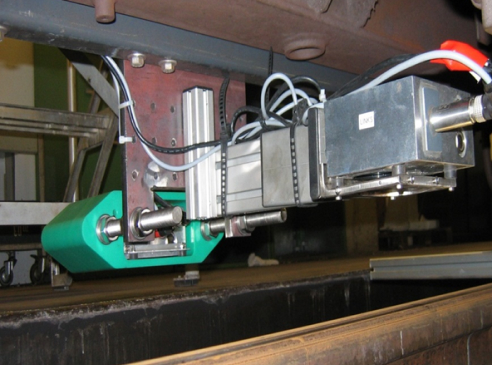
The contactless Third Rail Measurement System uses laser profile scanners to accurately measure the conductor rail’s height, lateral position, and wear condition. It evaluates the interaction between the conductor rail and current collector to support safe and efficient operation. The system can also monitor ramp profiles, track position, speed, and optional parameters such as contact quality, voltage, and impact forces. Advanced software enables detailed data analysis, identifies deviations, and supports maintenance planning and system optimization.
3rd Rail Measurement System Contacting
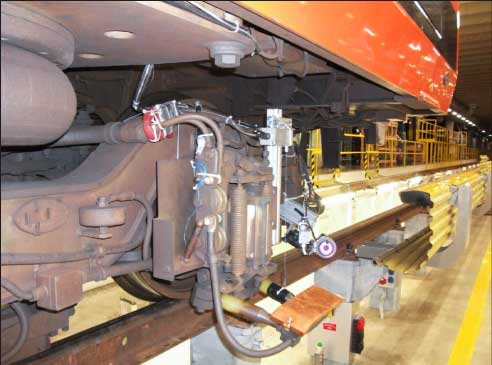
This 3rd Third Rail Measurement System uses contact-based sensors mounted on the current collector to measure conductor rail height and detect impact forces during operation. Optional monitoring includes electrical voltage, current draw and recuperation, UV arcing, and contact-point temperature. The system helps identify irregularities in the interaction between the third rail and current collector, supporting improved reliability and reduced life-cycle costs. User-friendly software enables data analysis, GPS-based mapping of deviations, and data export for further assessment and maintenance planning.
Noise Level Measurement System
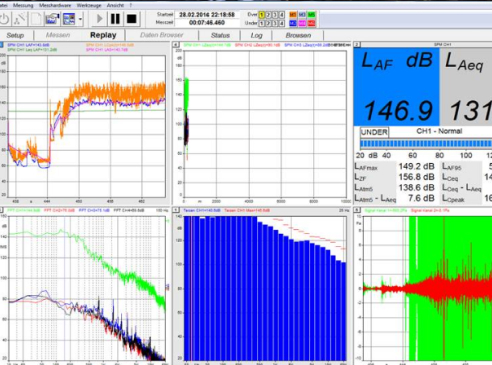
The Noise Level Measurement System records and analyses sound pressure levels at train wheels to identify areas with elevated noise emissions. By integrating GPS coordinates, train speed, wheel-running behaviour, and track geometry data, it enables precise localization and assessment of noise sources. Specialized software supports real-time data analysis and evaluation of noise patterns across the railway network. The system helps railway operators implement targeted noise reduction measures, improve passenger comfort, and minimize noise disturbance for nearby residents.
Running Clearance
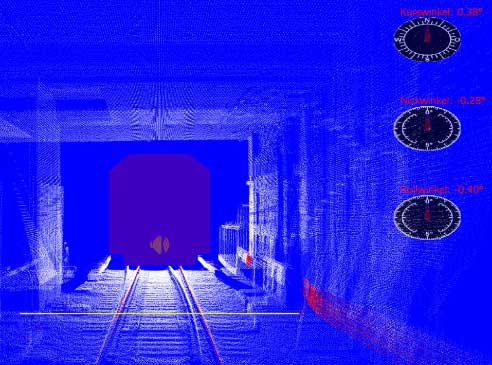
The Running Clearance Profile Measurement System uses multiple laser scanners to capture accurate track clearance profiles and generate detailed 3D point clouds of railway routes. It simultaneously records track geometry parameters, including curve radius, super elevation, track position, and speed. The collected data enables clearance analysis and simulation to verify vehicle compatibility and identify potential collision risks. Optional track centre distance measurement supports safe passage assessments for vehicles on adjacent tracks, assisting route digitization, infrastructure planning, and rolling stock procurement.
Ride Comfort Driving Quality and the Bogies
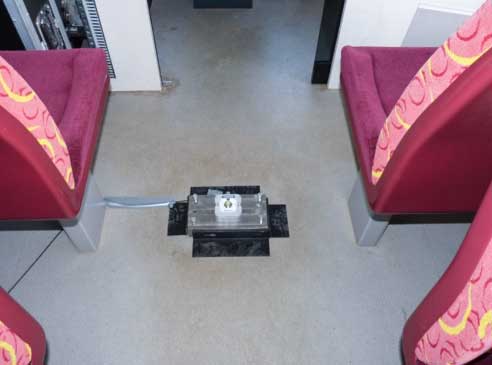
The Driving Comfort Measurement System evaluates the ride quality of railway vehicles by recording and analysing vibrations using triaxial acceleration sensors. It assesses passenger comfort in accordance with ISO 2631 and UIC 513 standards, generating comfort indices across three directions. Combined with track geometry measurements, the system helps identify the causes of excessive vibrations and accelerations. Detailed data analysis supports targeted improvements in ride comfort, vehicle performance, passenger satisfaction, and maintenance efficiency.
Rail Head Height Measurement System
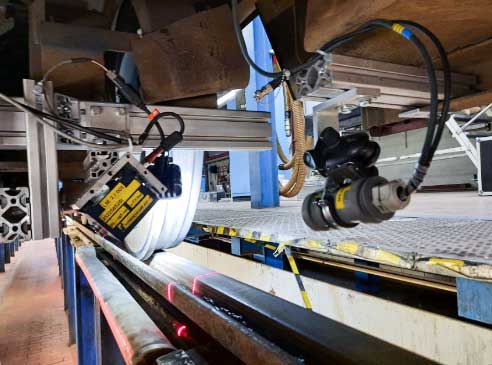
The Rail Head Height Measurement System accurately measures rail head height, track geometry, and rail wear to assess railway track conditions. Using advanced laser scanning technology, it captures rail profiles and identifies vertical and horizontal wear, track cant, twist, and other geometry deviations. High-resolution measurements recorded during normal train operations enable reliable condition monitoring and comparison of measurement campaigns over time. Dedicated evaluation software helps identify deviations from specified limits, supporting preventive maintenance, improved track safety, and optimized rail service life.
Rail Switch Measurement System
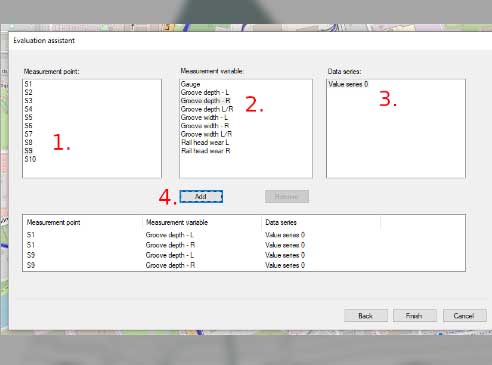
The Rail Switch Measurement System uses advanced laser scanners and image recognition technology to capture detailed switch profiles and assess component conditions. It enables precise monitoring of switch geometry, wear, and potential damage to identify maintenance requirements at an early stage. High-accuracy measurement data supports condition assessment and helps track changes over time. The system assists railway operators in planning timely maintenance, improving switch reliability, and enhancing the safety and efficiency of railway operations.